Business Inspiration from My Immigrant Grandfather
Shortly after dinner there was a light tap on our front door. My mother answered; from the kitchen I could hear a woman’s voice, delivering a timid directive.
“Please return this to Joe. My husband says that we really don’t need an extra one. Sorry.”
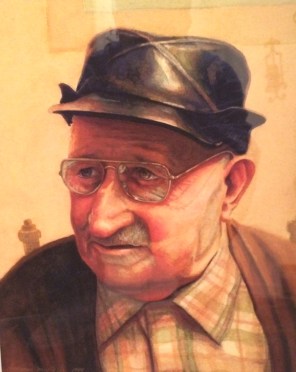
She handed my mother a rectangular box. Inside was a toilet seat, picked and repackaged from the morning trash by Giuseppe Iezzi, 83.
Mortified, my mother shut the door and bolted toward her dad, scolding him in Italian. He slumped in his recliner, silent.
I howled with laughter. So did my brother. Our grandfather tried to sell a second-hand toilet seat, to a stranger, in our glistening suburban development. Welcome to the neighborhood!
That was four decades ago. I was a college freshman. Through the years, I have told the story of my grandfather’s toilet seat caper many times, with great enthusiasm, eager to generate disbelieving smiles and head shakes from first-time listeners.
I owe my grandfather an apology, for reducing his life to caricature. It was much more.
Bread and Milk on Your Doorstep
When he 17 and evergreen, my grandfather exchanged the surety of his hometown – Castelli, Italy – for stowaway status on a commercial freighter bound for New York. His explorations took him from east coast industrial sprawl to Indiana farmland.
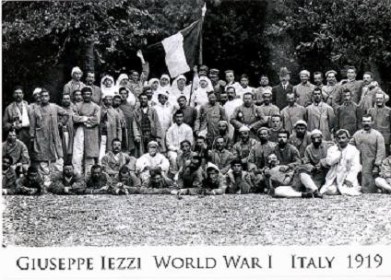
Ten months into his adventure, an urgent message from home: Italy had declared war on Austria-Hungary. He returned to serve in the army, nearly lost his left leg to shrapnel, and spent one year in a military hospital. More than 600,000 of his countrymen lost their lives in WW1, The Great War. Within two years, his homeland lost its way, ceding to Mussolini and fascism.
It was no place to dream.
At age 25, my grandfather pitched the promise and allure of America to his bride of three years: “They leave bread and milk on your doorstep each morning,” he told her.
Joseph and Theresa Iezzi entered the United States through Ellis Island in 1920, the tail end of our nation’s great immigration wave. Neither spoke English, neither had attended school in Italy. Within seven years, they were raising four children. They purchased their first home in 1925, one of three they would pay cash for in their lifetimes.
For 45 years, my grandfather labored honorably for his livelihood – assembly work in factories, maintenance on bridges. His kids learned English. They lived comfortably. They graduated from high school, part of America’s Greatest Generation.
To make it all so, when he was 25, when he was 45, when he was 65 and well beyond, Joseph Iezzi scavenged neighborhood trash and construction sites, for copper and other metals, for appliances that could be repaired, to earn a few dollars here and there through trade. He bore zero shame in it.
His second-generation American progeny included 13 grandchildren, among them a fine artist, a university athletic trainer, an executive at a global food giant, a teacher, business and manufacturing professionals. All with no knowledge of his Italy, all with little understanding of whom he was, all with scant appreciation for what he had risked.

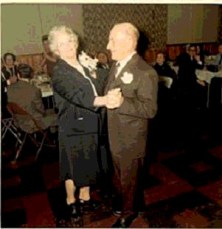
When he came to live at our house, to be cared for by his daughter, he was 81. His wife of 59 years, the woman who chose to believe in his America, sight unseen, was with him, dying from liver cancer. She passed within four months. I did not appreciate the depth of my grandfather’s loss back then, or the emptiness of his remaining days in suburbia.
Trash Days and Christmas Morning
He lived eleven more years, walking our neighborhood streets daily. Friday trash collection days were greeted with Christmas morning anticipation, each an opportunity to restore self-worth from a little digging.
The toilet seat story that amused me when I was a teen instructs me now as a small business owner. About the adolescent stowaway, about the young man willing to trade his cultural identity for a share in a new one, this I believe to be true: the woman who returned the toilet seat to my mother that day was merely the first neighbor who said yes to Joseph Iezzi’s irresistible offer; doubtless, five or six others declined.
I wish I had more of my grandfather’s mettle. The biggest risk I have I taken was at age 54, when I started a skin care brand. It has been a struggle to build a reliable distribution channel, and on plenty of days I worry too much about the pace of progress and the setbacks I experience.
My fretting, of course, is foolish.
A clear, hopeful path has already been charted for me.
Hop on the freighter.
Knock on the next door.

 Lefthand Communications